Qingyang District · north of the centre
Wenshu Monastery, where the incantation is still going
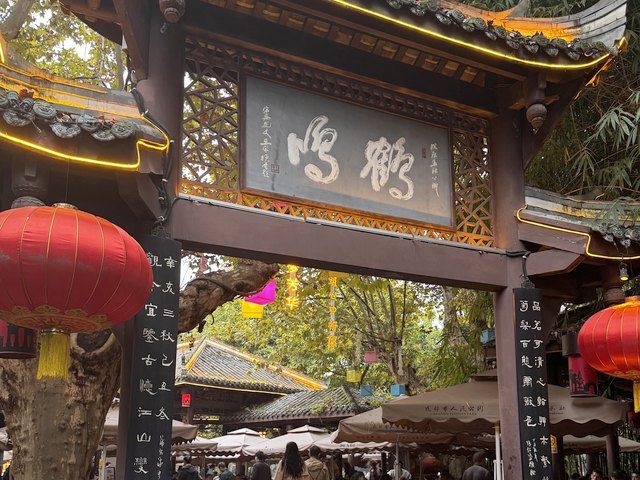
Wenshu Monastery is free to enter, five minutes from a metro exit, and not a reconstruction: monks chant in the halls, locals take tea in the courtyard, and the vegetarian kitchen out back feeds both.

Prices and hours checked 24 October 2026Hours and free entry from the notice board at the gate (read on site); address, halls and relics from guides checked 25 October 2026
Why Wenshu and not another temple
Chengdu has rebuilt plenty of its old streets around a story, and Wenshu is the counter-example: a Chan Buddhist monastery that was founded in the Sui dynasty, burned, rebuilt in the Qing, and has been in continuous use ever since. The halls are working rooms. You will walk past people praying, monks crossing the courtyards, and a table of locals on their fourth round of tea.
That is the reason to put Wenshu on a short trip: it costs nothing, it sits three stops from the centre on Line 1, and it shows you the thing Chengdu actually does well — sitting still in company — without a ticket window or a themed arcade in front of it.
Entry, hours and the way in
- Entry
- Free; no ticket and no reservation
- Hours
- 08:00–17:00, every day of the year
- Last entry
- Guides say 16:30, the gate says 17:00 — arrive by 16:00 and the question does not arise
- Metro
- Line 1 to Wenshu Monastery, Exit K, then about 500 m
- Address
- 66 Wenshuyuan Street, Qingyang District
- Size
- About 13.5 mu (0.9 ha), 190-odd rooms, halls on a single north–south axis
- Time needed
- 1.5–2 hours; three if you take tea and lunch
- Inside
- Incense is provided at the gate, one stick per visitor, free
Entry and hours read off the notice board at the gate on 24 October 2026. The size and hall-count figures below are what travel guides report, not what the monastery publishes, and the guides disagree on how the halls are counted.
The visit, in the order it happens
- 1
Take the incense at the gate
It is free and it is handed out just inside the entrance, on the right. One stick, lit at the braziers in the first courtyard — this is a place of worship first, so the queue you are joining is not a queue for a photo.
- 2
Walk the axis, hall by hall
The Hall of the Heavenly Kings, then the Mahavira Hall, then the Hall of the Three Great Bodhisattvas — Guanyin, Manjushri and Samantabhadra — then the Dharma Teaching Hall and the scripture library at the back. Timber, single and double eaves, West Sichuan proportions; no two halls are the same size and the sequence is the design.
- 3
Circle the Thousand Buddha Peace Pagoda
An iron pagoda at the eastern end of the compound, next to the sutra counter, named for the thousand Buddha images on it. People walk around it clockwise while praying; join in or stand aside, but do not cut across the flow.
- 4
Sit down in the teahouse
Covered glass of jasmine tea, bamboo chairs, no expectation that you leave. This is the same institution as the halls, not a café attached to a sight: the tea is the point of the afternoon for most of the people in the courtyard.
- 5
Eat in the vegetarian kitchen
Wenshu runs a canteen and a restaurant, and both are cheap. The menu lists pork, beef and chicken by name; all of it is gluten, tofu and mushroom, and the chilli levels are mild by Chengdu standards.
Eating inside the walls
- 01
The vegetarian canteen (香园)
The cheap option: rice, a few dishes, a tray, locals and monks in the same queue. Go before 12:00 or after 13:00 if you want a seat.
- 02
The upstairs vegetarian restaurant
Same kitchen tradition, proper table service, dishes built to imitate meat. Not expensive by city-centre standards, and the reason many Chengdu residents come here at all.
- 03
The teahouse
Tea by the cup, refilled with hot water for as long as you sit. It is the cheapest hour in Chengdu and the one most visitors skip.
When to come, and what not to expect
Come at opening. The courtyards are quiet until about 10:00, when the tour groups arrive and the incense braziers get crowded; the same hour that ruins the panda base ruins this. There is no seasonal split in the opening hours, so a winter morning and a summer morning run to the same timetable.
Do not expect a museum: there are no labels on the halls, no audio guide, and no route arrows. Do expect to be asked to keep quiet near the halls where people are praying, and dress as you would for any working temple rather than for a photo shoot. The street outside, Wenshufang, is the commercial version of the same story — restaurants, souvenir shops and higher prices; it is a fine place to eat and a poor place to learn what the monastery is.
One thing the timetable does not spell out: the gate stops letting people in at 17:00, but nobody walks the courtyards afterwards to move people out. The halls shut and Wenshu goes back to its own evening, and whoever is still inside is left to it. The crowd thins as the light goes, and that last stretch is the quietest the place gets all day — the reverse of the opening hour, when the tour groups are already at the gate. If that is the hour you came for, go in shortly before closing and take your time leaving.
And the halls do not simply go dark. Once the gate is shut the monks gather in them for the evening chanting, and a visitor who is still inside can stand at the edge of the courtyard and hear it — the part of the day almost no tourist sees. Stand to the side, keep the phone in your pocket, and it is worth the ten minutes; it is worship, not a performance, and it will not wait for a photograph.
Questions people actually ask
Is Wenshu Monastery free?
Yes. There is no ticket and no reservation — you walk in. That was confirmed against the notice board at the gate on 24 October 2026, and it is the reason the monastery is on this site's free list rather than its ticket table.
What are the opening hours?
08:00–17:00, every day, with no seasonal change. Travel guides quote a last entry of 16:30 while the gate states 17:00; arriving by 16:00 avoids the discrepancy entirely.
How do you get to Wenshu Monastery from Chunxi Road?
Metro Line 1 from Chunxi Road to Wenshu Monastery station, one stop north, then Exit K and about 500 metres on foot. From People's Park, take Line 1 southbound two stops.
How long do you need there?
An hour and a half covers the halls and the pagoda. Three hours is the honest figure if you take tea in the courtyard and eat in the vegetarian canteen, which is what the place is actually for.
Is there anything to eat that is not spicy?
Yes — the vegetarian kitchens serve mock meat dishes that are mild by local standards, and the teahouse serves tea and simple snacks. Both are inside the monastery walls and both are cheap.