Longquanyi District · about 25 km east of the centre
Luodai: the Hakka town, and why it is not like the other old towns
Luodai is a one-street old town east of Chengdu where the shop signs are still in Hakka memory as much as in Sichuan dialect: the town was the western centre of the Hakka migration, and the four guild halls along its street are the largest group of migrant-association buildings in China. Entry is free and the walk is level. What makes it worth the trip is that the halls are real, not rebuilt scenery.

Prices and hours checked 28 October 2026Luodai attraction records on 本地宝, 去哪儿 and 新浪旅游 (halls, hours, free entry); the Line 4 + 219/L024 route is the one the town's own access signs describe
What makes Luodai different
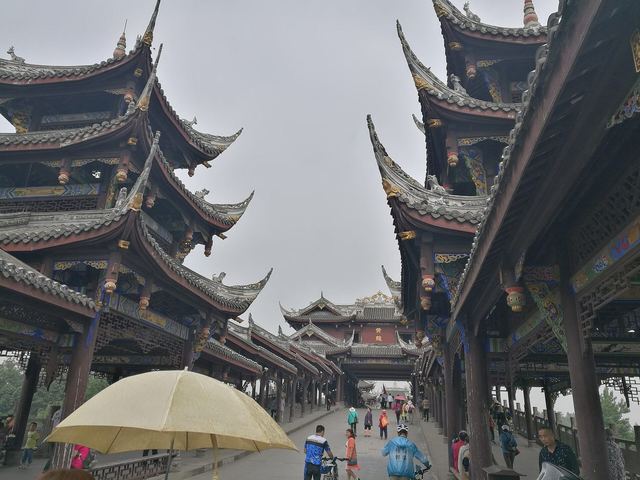
Most old towns around Chengdu are rebuilt shopping streets with a story attached. Luodai is a shopping street with a different story, and the buildings to back it up. After 湖广填四川 — the seventeenth- and eighteenth-century resettlement of Sichuan — Hakka families from Guangdong, Jiangxi and Hubei settled along this ridge, and by the nineteenth century the town had built itself four guild halls, one per community, within a few hundred metres of each other.
That is the thing to see. 广东会馆 is the largest and the most ornate, with a stage, painted beams and a courtyard that is still used; 江西会馆 and 湖广会馆 sit further along the same street; 川北会馆 completes the set. Together they are a national-level protected site, and walking between them in ten minutes tells you more about how migration worked in Sichuan than any museum label.
The town's name is a legend rather than a record: a jade belt — 带 — belonging to Liu Shan, the last Shu Han emperor, was said to have fallen into a well here, and 落带 ('lost belt') became 洛带. The well is pointed out; the story is not verifiable; it is a good name either way.
What to see along the one street
- 01
The four guild halls
广东会馆, 江西会馆, 湖广会馆 and 川北会馆, all free to enter, spread along the old street. The Cantonese hall is the one to spend time in — stage, courtyard, carved beams — and it is also where you notice that each hall's architecture is slightly different, because each community built in the style it brought with it.
- 02
博客楼, the round tulou
A four-storey circular earthen building modelled on Fujian's tulou, built as a Hakka museum rather than as a dwelling. Free, open 09:00 to 18:00 in winter and to 19:00 in summer. It is the photograph everyone takes, and the museum inside is better than the exterior suggests.
- 03
燃灯古寺 and 五凤楼
The town's old temple and its gate tower, at opposite ends of the visit. Neither takes long; both are working parts of the town rather than exhibits.
- 04
The lanes behind the street
Luodai's old layout is described as 一街七巷子 — one street, seven lanes. The lanes are where people actually live, and one lane back from the main street the snack stalls stop and the courtyards start.
Getting there
- 1
Metro Line 4 to Xihe (西河), Exit B
Xihe is the eastern end of Line 4. It is still inside the city; the town is another eight kilometres out, which is why the bus leg exists.
- 2
Bus 219 or L024 to Luodai bus station
Both routes run from Xihe to 洛带客运站. The ride takes roughly half an hour; 219 is the frequent one and L024 the shorter, and either works.
- 3
Five minutes on foot
From the bus station it is about five minutes to the old street entrance. The alternative route — Line 2 to 龙泉驿, then bus 850 to 博客小镇 — puts you in at the tulou end instead.
Practical
- Entry
- Free — the street, the four halls and the temple
- Hours
- Street open all day; 博客楼 09:00–18:00 (winter), 09:00–19:00 (summer)
- Metro route
- Line 4 to Xihe, Exit B, bus 219 or L024, about 5 minutes on foot
- Alternative
- Line 2 to Longquanyi, bus 850 to 博客小镇, entering at the tulou end
- Driving
- About 25 km; car parks at the town edge
- Best time
- Weekday morning; weekends after 11:00 are crowded
- Time needed
- 3–4 hours for the street and the halls; a full day with the ridge
Route and hours checked 28 October 2026. The tulou keeps separate hours from the street; the ridge wall is a different attraction with its own ticket.
What to eat
Luodai's food is Hakka rather than Sichuan, and the difference is obvious in the first bite. 伤心凉粉 — 'sad' cold noodles — is the signature: starch noodles in a chilli and vinegar dressing hot enough to make you cry, which is where the name comes from, though locals will also tell you it is because the Hakka were homesick. 油烫鹅 is the other one to order: goose smoked, braised and then fried, a process that takes the better part of a day.
Beyond those two, look for 天鹅蛋 (fried glutinous rice balls rolled in sesame and sugar), 客家酿豆腐 (tofu stuffed with pork) and 艾蒿馍馍, the mugwort-flour bun that appears in spring. Prices are low and portions are not small; two people can eat their way down the street for the price of one restaurant meal in the centre.
Eat at the stalls rather than sitting down. The street is set up for it, and the seated restaurants along the main drag are the ones that assume you will not come back.
Luodai or Huanglongxi?
Both are free old towns within an hour or so of the centre, and both are one street long. The difference is what the street is about: Luodai is a Hakka town with four guild halls and a migration story, Huanglongxi is a river town with temples, a magistracy and a stone quay. Luodai is closer and quicker to reach; Huanglongxi is prettier at the water's edge.
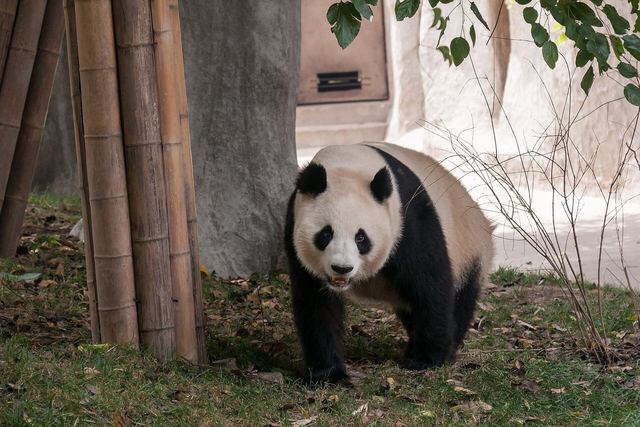
If you have one free day and no car, take Luodai. If you have a car and are happy to drive, Huanglongxi fits better. The panda base is 16km north of the centre, so it pairs with neither town. Doing both in one day is possible and not advisable — they are on opposite sides of the city, and by the second town the snack stalls all look the same.
Questions people actually ask
Is Luodai Ancient Town free?
Yes. The old street, the four guild halls, the temple and 博客楼 are all free to enter. The only paid attraction nearby is 金龙长城, the rebuilt wall on the ridge, which costs CNY 30 and is a separate site.
How do I get to Luodai from Chengdu?
Metro Line 4 to Xihe (西河), Exit B, then bus 219 or L024 to Luodai bus station, then about five minutes on foot. Alternatively Line 2 to Longquanyi and bus 850 to 博客小镇, which drops you at the tulou end of town. Allow about an hour door to door from the centre.
What is Luodai known for?
Its Hakka heritage. Luodai was the western centre of the Hakka migration into Sichuan, and it has four nineteenth-century guild halls — Guangdong, Jiangxi, Hubei and Chuanbei — that are a national-level protected site. The round tulou called 博客楼 and the Hakka food, particularly 伤心凉粉 and 油烫鹅, are the other reasons people come.
How long does Luodai take?
Three to four hours for the street, the halls and a meal. If you add 金龙长城 on the ridge, allow a full day — the wall alone is an hour or more, and the ticket is separate.
Is Luodai better than Huanglongxi?
They are different towns with the same shape. Luodai is Hakka, with guild halls and the tulou, and it is closer to the city. Huanglongxi is a river town with a stone quay and three temples, and it is further south. If you are choosing one, pick on the story rather than the distance — both are free and neither needs more than half a day.