Chenghua District · east of the centre
Dongjiao Memory: a factory that became a backdrop
A 1958 electron-tube factory in Chengdu's old eastern industrial belt, kept as brick halls, chimneys, pipes and a steam locomotive, and rented out to cafés, stages and shops. Entry is free and it never closes, which makes it the cheapest good hour in the city after the museums shut.

Prices and hours checked 22 October 2026Welcome to Chengdu — Dongjiao Memory guide (entry, metro exit, address); Wikipedia for the factory history
What the place is
Eastern Suburb Memory — 东郊记忆 — occupies the site of the Chengdu National Hongguang Electron Tube Factory, 成都国营红光电子管厂, established in 1958 as part of the country's first push into electronics. For decades this eastern belt of Chengdu was factories, research institutes and workers' housing; the plant made electronic components and sat close to the milestones of China's television and display industry.
When the industry moved out, the city handed the site to cultural reuse rather than demolition, and Chengdu Media Group redeveloped it on a principle the architects stated plainly: 修旧如旧,旧房新用 — repair the old as old, use old buildings for new purposes. It opened on 29 September 2011 as 成都东区音乐公园, the Chengdu Eastern Suburb Music Park, and was renamed Dongjiao Memory on 1 November 2012. The brick halls, the chimneys, the overhead pipes and the locomotive are the factory's own; the cafés, stages and shops are the second act.
What that buys you is scale and texture. This is not a single preserved building behind glass but a whole industrial block you walk through, with the two chimneys visible from the metro exit and a forecourt big enough to absorb a weekend crowd.
The four things worth finding
- 01
Locomotive Square (火车头广场)
An 东方红 steam locomotive on its rails with green passenger carriages behind it — the park's signature photograph. One carriage has been fitted out as a café, which is also the best place to sit when your feet give out.
- 02
The 「成都」red wall
A long red wall carrying the city's name in huge characters, near the south gate. It is the most photographed thing here and the one place a queue forms; the trick is the café terrace across the street, which gives you the wall side-on instead of head-on.
- 03
The industrial cross street
Weathered red brick, exposed pipework, old machinery left where it stood and the chimneys above it. This is the part that still reads as a factory rather than a shopping street, and it is at its best once the lights come on.
- 04
The graffiti street
Walls of painted panels and mural work, repainted often enough that it is different each year. Dark, plain clothing photographs better against it than anything patterned.
Getting there, and how long to give it
- Entry
- Free; no ticket and no reservation, walk in
- Hours
- The park is open all day; the shops, cafés and venues inside keep their own hours
- Metro
- Line 8 to Dongjiao Memory (东郊记忆), Exit B1, then 5–6 minutes on foot
- Address
- 4 Jianshe South Branch Road (建设南支路 4 号), Chenghua District
- Best hours
- 14:00–20:00 — afternoon light for the brickwork, then the installations lit after dark
- Time needed
- 1–2 hours for the halls and chimneys; 3–4 if you work through all four photo spots and eat here
- What is here
- Music venues, theatres, exhibition rooms, cafés, restaurants and shops inside the old factory buildings
- Status
- Listed as national industrial heritage and a national cultural-industry demonstration base
Practical details checked 22 October 2026 against the guide named below. The park has no ticket office, so entry and hours are the guide's account of an open site rather than an operator's notice.
What it is not
It is not a museum. There is no collection, no interpretation of the factory's working life and no ticket window, so a reader who wants the industrial past explained should go to Chengdu Museum or the Jianchuan Museum cluster instead. Dongjiao Memory preserves the shell and rents the inside.
It is also thoroughly commercial, and the honest version of the visit is that you are looking at a very good stage set: brick halls that were once a factory, now holding coffee at city prices and clothes you can buy anywhere. The chimneys are real and the shops are not interesting, which is fine as long as you came for the first part.
Where it earns its place is the combination nobody else offers in Chengdu — industrial architecture, free entry, no closing time and a metro stop at the gate — and the fact that it works in bad weather. Grey Chengdu light flatters the brickwork; a wet forecourt with the lights on is better than a sunny afternoon.
When to come
Late afternoon into early evening is the right window: 14:00 gives you clean light on the south gate and the locomotive, and by 19:30 the installations and the chimneys are lit. Weekday mornings are the quietest, and a weekend midday is when the red wall has a queue.
Allow more time than the card suggests if photography is the reason you are here. The four spots are spread across the block, and the walking between them, plus a coffee, is what turns an hour into an afternoon.
The park also hosts concerts, exhibitions and festivals through the year, and those change the atmosphere entirely — a ticketed show can shut part of the site for the evening. Check the venue's own channels for the week you are travelling rather than relying on a fixed calendar.
Where to go next
- 01
Wenshu Monastery
The working temple north-west of here, free, and the better half of a day if you want old Chengdu rather than industrial Chengdu.
- 02
Chengdu Museum
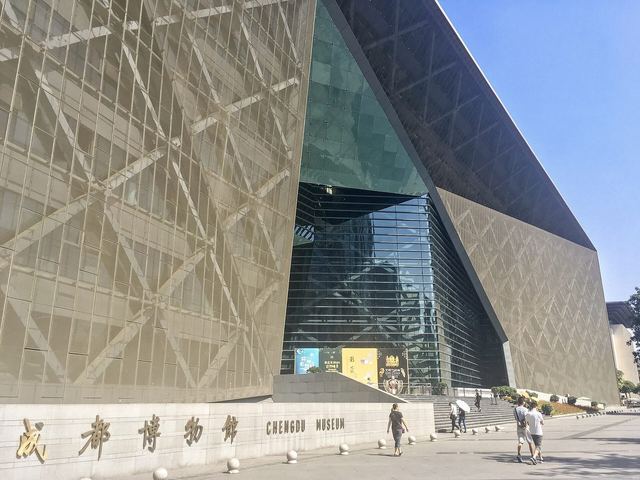
The city's own history collection by Tianfu Square — the interpretation the factory park deliberately leaves out. Free, but it needs a real-name reservation.
- 03
Taikoo Li
If the shopping is what you came for, this is where Chengdu does it properly, in low grey-roofed lanes rather than in a converted factory.
Questions people actually ask
Is Dongjiao Memory free?
Yes. There is no ticket and no reservation — you walk in. Individual venues inside, such as concerts or ticketed exhibitions, charge separately, and the shops and cafés have their own prices.
How do you get to Dongjiao Memory by metro?
Line 8 to Dongjiao Memory (东郊记忆) station, Exit B1, then 5–6 minutes on foot to the south gate. The station is named for the park, so there is no second guess about which exit to look for.
How long should you spend at Dongjiao Memory?
One to two hours covers the brick halls, the chimneys and a walk through the block. Three to four hours is the realistic figure if you are working through the four photo spots — the locomotive, the red wall, the industrial cross street and the graffiti — and stopping to eat.
What is the best time to visit Dongjiao Memory?
From 14:00 to about 20:00. The afternoon light is cleaner on the brickwork and the locomotive, and by 19:30 the installations and chimneys are lit. Weekday mornings are quietest; weekend midday is when the red wall has a queue.
What was Dongjiao Memory before it was a park?
It was the Chengdu National Hongguang Electron Tube Factory, 成都国营红光电子管厂, established in 1958 as part of China's early electronics industry. The site opened as the Chengdu Eastern Suburb Music Park on 29 September 2011 and was renamed Dongjiao Memory on 1 November 2012, keeping the factory buildings, chimneys and pipework.
Is Dongjiao Memory worth visiting?
For photographs and a free evening, yes: the brick halls, the two chimneys and the locomotive are genuine factory fabric, and the metro stops at the gate. For industrial history, no — there is no museum content explaining the factory, so read up first or pair it with Chengdu Museum.