Qingyang District · west of the centre
Du Fu Thatched Cottage, where the poems were written
Du Fu reached Chengdu in the winter of 759, built a thatched house by a stream the next spring, and stayed three years and nine months. More than 240 of the poems he wrote there survive. The buildings are Ming and Qing; the ground and the poems are his.

Prices and hours checked 26 October 2026Ticket notice and opening hours, Chengdu Du Fu Thatched Cottage Museum
Why the cottage, and not another rebuilt street
Du Fu arrived in Chengdu in the winter of 759, fleeing the An Lushan rebellion with his family. In the spring of 760 he put up a thatched house beside the Huanhua Stream and lived in it for three years and nine months; more than 240 of the poems he wrote there survive. That body of work is what turned a rented hut on the edge of a provincial town into what the museum calls a sacred place in Chinese literary history.
The house you walk through is not that hut. The poet Wei Zhuang found the site at the end of the Tang and re-thatched it, and the complex has been repaired and enlarged fourteen times since the Song. The five halls on the central axis — gate, Daxie, Shishitang, Chaimen, Gongbu Shrine — are the buildings of the Ming Hongzhi (1500) and Qing Jiaqing (1811) rebuilds. What survives from Du Fu is the site, the stream, the bamboo and the poems, which is why two hours here is worth more than an afternoon on a commercial reconstruction.
The place also has scale on its side. The grounds run to nearly 800 mu — about 53 hectares, 300 of them the relic area and 500 the garden — and the museum describes them as three parts: the memorial halls, the Caotang temple and the plum garden. It is the country's largest collection point for Du Fu research material and for calligraphy and painting of his poems, and the paths absorb a crowd instead of funnelling it past a ticket window.
Tickets, hours and the way in
- Full ticket
- CNY 50 per person, per visit
- Half ticket
- CNY 25 — full-time students at undergraduate level and below, with a student ID at the window
- Annual pass
- CNY 100 per person per year; one use each morning and afternoon
- Free entry
- Chinese visitors 60+ and under-18s with the original ID, disabled visitors, serving military and police, and a published list of other groups
- Hours
- 9:00–18:00 daily; ticket sales stop at 17:00
- Holidays
- 8:30–18:30 (sales to 17:30) during Spring Festival, Labour Day, the summer holidays and National Day, announced per stretch
- Metro
- Line 13 to Du Fu Thatched Cottage, Exit C2, which comes out at the north gate
- Other ways
- Line 4 to Caotang North Road, then on foot; Line 5 to Qingyanggong, then on foot; bus 19/35/58/82/151/165/170
- Address
- 37 Qinghua Road, Qingyang District (north gate)
- Time needed
- 2 hours for the halls and the cottage, 3 with the garden
From the museum's own ticket notice, transport page and guide page, all read on 26 October 2026. One ticket covers the halls, the thatched cottage and the garden.
The visit, in the museum's own order
- 1
The gate, then Daxie
正门 opens onto the first courtyard, with 大廨 behind it. 廨 means government office: the hall is named for the post Du Fu held at the Ministry of Works, and it was given that name in the Jiaqing-era restoration. Start here for the man and the journey west.
- 2
Shishitang, the hall of poetry as history
诗史堂 — the hall of the poet-historian, from the old idea that Du Fu's poems record the wars and famines of his own time. Du Fu stands at the centre of the hall; read the couplets on the columns slowly, because this is a museum of writing arranged like a shrine.
- 3
Chaimen and the Gongbu Shrine
柴门, the brushwood gate, marks the old entry to the cottage plot. Beyond it 工部祠 is the memorial hall proper: Du Fu in the centre, with the Song poets who learned from him — Huang Tingjian and Lu You — on either side.
- 4
The stele pavilion and the thatched cottage
少陵草堂碑亭 holds the stone behind the formal name; Shaoling was Du Fu's own pen name. Then 茅屋景区, the thatched, timber-framed house of the kind he built, with the stream and bamboo around it. It is the photograph most visitors come for and it is a rebuild — treat it as a stage set for the poems, not a relic.
- 5
The Tang site and the red wall
唐代遗址 covers what excavation inside the grounds turned up from the Tang occupation. Then 红墙花径, the red wall with its bamboo-lined path: the one image everybody takes, and the one place a queue forms. Come at opening or late afternoon.
- 6
The halls at the back, then the garden
Finish the buildings at 大雅堂 and 万佛楼, then walk the garden: 盆景园 for penjing, 兰园 for orchids, 梅园 for plum. 千诗碑 gathers a thousand of Du Fu's poems as inscriptions in different calligraphic scripts, and 草堂书院 — the academy — closes the circuit. Two hours covers the halls; the garden is what the third hour is for.
If you do not read Chinese
Du Fu is a poet, and this museum is built around text: couplets on the columns, poems cut into steles, a thousand inscriptions spread across the garden. The museum's provision for visitors who do not read Chinese is audio rather than panels, and it is unusually cheap. Chinese-and-English commentary for each sight is free in the museum's own WeChat service account, under 参观指南 → 游览攻略 — no booking and no queue at the gate. At the gates and in front of each sight, a QR-code audio guide costs about CNY 10–18 a language with English included, and a rented handset is CNY 25.
A human guide is the other route, priced per person rather than per group: the museum charges CNY 60 per person for a foreign-language guide, for a walk of roughly an hour. Read two or three of the Chengdu poems before you arrive — 《春夜喜雨》 and 《茅屋为秋风所破歌》 are the two everyone knows — and the halls read as rooms instead of labels.
When to come
Nine o'clock, when the doors open, is the quiet hour, with the best light in the courtyards. Tour groups arrive through the middle of the morning and move through the halls in blocks; if you miss the opening, come after 15:00, when the coaches have gone. The 17:00 ticket cut-off is real, so an afternoon visit means arriving by 16:00 at the latest.
The garden moves through the year — plum in late winter, orchids in spring, lotus in summer — and the museum announces those shows on its own site rather than fixing them in advance. Rain is not a reason to skip the place: the halls are indoors and the garden is at its best wet, bamboo and red wall going darker rather than greyer.
The park next door, and why it completes the visit
Huanhuaxi Park begins at the museum's south side and runs along the stream the cottage is named after. It is free, it needs no booking, and it is the reason the cottage still reads as a house on the edge of open country rather than a monument in a city block: leave by the south gate and you are immediately among reeds, bamboo and water instead of traffic.
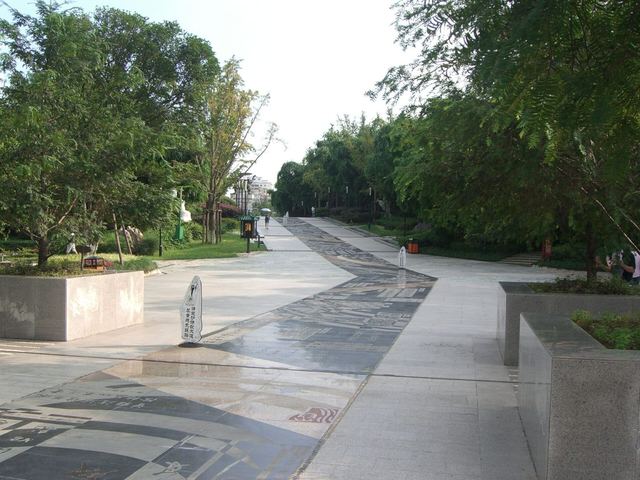
The park's own set piece is Poetry Avenue, a walkway with lines carved into the stone from Du Fu and the other Tang poets who wrote about this stretch of Chengdu. It costs nothing extra and takes about forty minutes to walk, which makes it the natural second half of a morning: the cottage first, while the halls are quiet, then the park as the light comes up.
Timing matters here more than at the museum. Late winter brings plum, spring brings blossom along the water, and weekday mornings belong to tai chi groups and bird photographers; weekend afternoons are the busiest hours in the whole neighbourhood. If you are walking back to Qinghua Road for lunch, the park is directly on the way.
What else is on the same street
Sichuan Museum holds the provincial collection, at 5 Qinghua Road — the short walk that turns this into a full day rather than a morning. Free, Tuesday to Sunday 9:00–17:00, closed Mondays except public holidays, and it requires its own advance booking through its WeChat account, so register before you set out rather than at the door.
People's Park is the other half of the city's idea of a good afternoon: if the day needs a chair rather than another hall, the teahouse and its bamboo chairs are the short ride east. Entry is free and the gates never close, so it works as the last stop rather than a timed one.
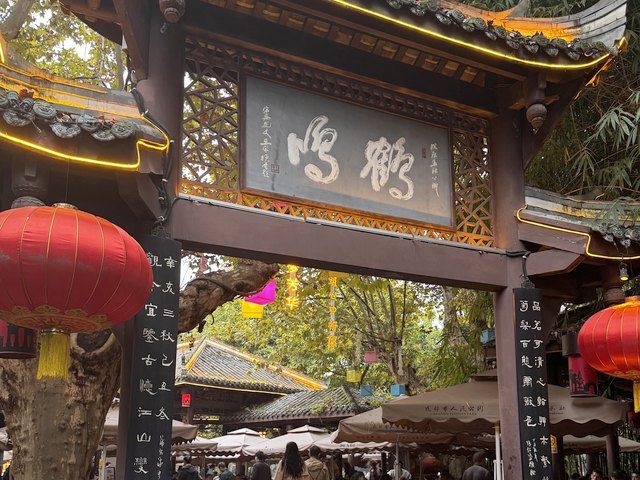
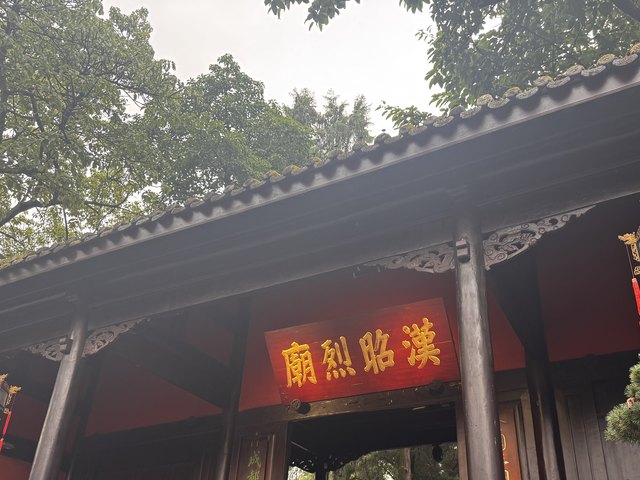
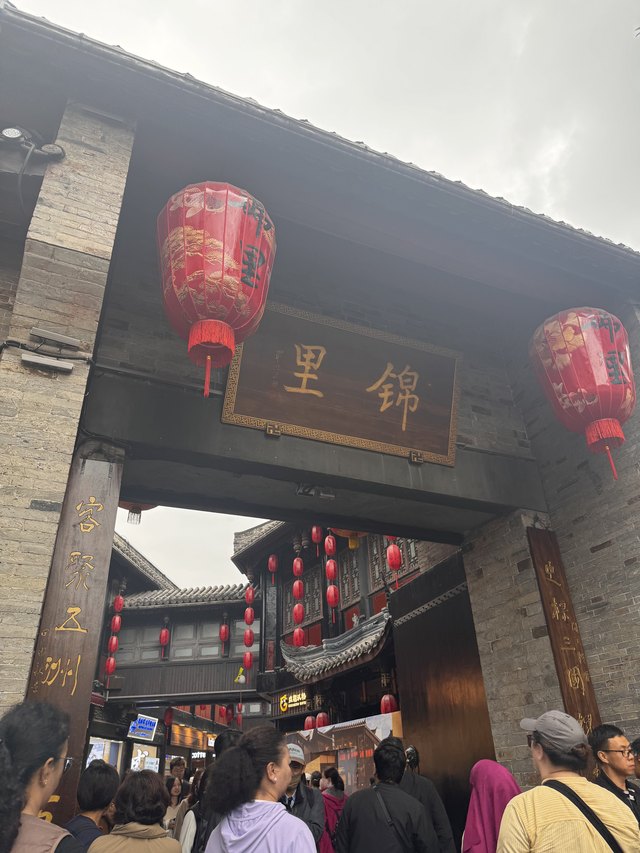
Wuhou Shrine is the other paid memorial complex in the city, and the one to choose if you only have time for a single ticketed sight — Three Kingdoms halls and a red-wall bamboo corridor, with Jinli Street attached to its side for the shopping half.
Questions people actually ask
How much is a ticket to Du Fu Thatched Cottage?
CNY 50 for a full ticket and CNY 25 for full-time students at undergraduate level and below; an annual pass is CNY 100. That is the museum's published tariff, checked on 26 October 2026, and one ticket covers the halls, the cottage and the garden.
What are the opening hours?
9:00–18:00 every day, with ticket sales ending at 17:00. During Spring Festival, Labour Day, the summer holidays and National Day the museum extends to 8:30–18:30 with sales to 17:30, announced separately for each stretch — so check the museum's site if you are travelling on a public holiday.
How do you get to Du Fu Thatched Cottage by metro?
Line 13 to Du Fu Thatched Cottage station and leave by Exit C2, which comes out at the museum's north gate. Line 4's Caotang North Road station and Line 5's Qingyanggong station are both within walking distance if you are coming from another direction.
How long does a visit take?
Two hours for the five halls, the stele pavilion, the thatched cottage and the red-wall path. Three if you walk the garden properly — the penjing, orchid and plum gardens and the thousand-poem inscriptions are spread over 500 mu of it.
Do you need to book in advance?
No. The museum takes real-name reservations 14 days ahead through its WeChat service account, and it also sells tickets at the counter to visitors with a passport. Booking matters on holiday weeks and at National Day; on an ordinary weekday you can walk up.
Is it worth visiting if you know nothing about Chinese poetry?
Yes, with adjusted expectations. The five halls, the thatched house and the garden stand on their own, and the museum leads with audio for non-Chinese visitors: free bilingual commentary in its WeChat account, and QR-code guides at each sight from about CNY 10. Du Fu's Chengdu poems are also short — 《春夜喜雨》 is eight lines — so an hour of reading before you arrive changes what you see.